



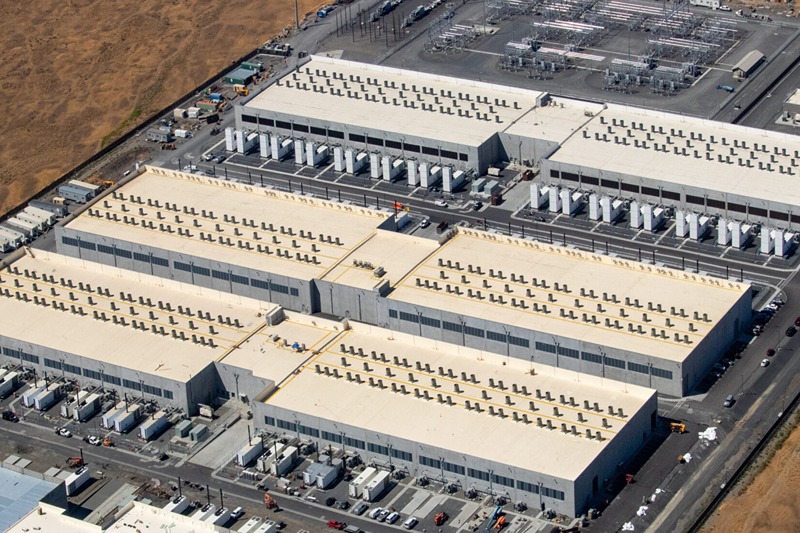

The rapid expansion of AI is creating a new electricity challenge, with data centres and computing infrastructure requiring large volumes of reliable, continuous power. For Africa, where electricity supply remains inadequate in many countries and grids can be weak or fragmented, meeting the growing power needs of digital and industrial activity will add to the continent’s energy requirements.
Nuclear expert and vice-chancellor of South Africa’s North-West University (NWU), Professor Bismark Tyobeka put the link between AI and nuclear energy at the centre of a recent public lecture, arguing that the two technologies are increasingly converging around the need for reliable, low-carbon electricity.
“If we are to deploy maximum AI capabilities, we need to know that we are going to create a serious energy deficiency,” he said.
The growth of AI is accompanied by increasing volumes of data, computing and hyperscale data centres. Tyobeka pointed to the soaring power density and scale of the GPU clusters used to run AI models, creating a need for reliable, 24-hour electricity.

Dr Katlego Phoshoko, data services and applications manager at South African research and development (R&D) organisation the Council for Scientific and Industrial Research, reinforced the point, describing the future of AI as “fundamentally an energy challenge”. He noted that the computing requirements of AI facilities are pushing electricity demand beyond the traditional conception of a data centre, with some facilities requiring power on a scale comparable with that of a city.
Phoshoko notes that access to computing capacity is becoming part of economic competitiveness, particularly as countries compete to attract digital infrastructure and investment. “A country that can out-compute you, can outcompete you,” he said.
Tyobeka argues that nuclear could form part of the response to this emerging demand. Renewable generation will remain important, he said, yet intermittent sources cannot by themselves guarantee the continuous electricity required by large computing facilities. Nuclear can provide firm, low-carbon generation at scale, creating a potential complement to renewable energy as Africa expands its digital infrastructure.
The attraction, in his view, is particularly strong for small-modular reactors (SMRs) and microreactors. Large nuclear projects have often been associated with long construction periods, cost overruns and significant capital requirements. Tyobeka argues that those experiences should not constrain further innovation.
“They have proven that technology works, but let’s make them smaller,” he said, arguing that a smaller reactor could reduce the footprint and some of the challenges associated with large nuclear plants.
He outlined several possible deployment models, including nuclear generation located alongside data centres, on-site microreactors, hybrid systems combining nuclear with wind and solar, and fleets of modular reactors supplying larger grids. The appropriate configuration would depend on the strength of the electricity network and the nature and location of the demand.
That flexibility could have wider relevance across Africa. Tyobeka identified potential applications not only in digital infrastructure, but also in mining and mineral processing, manufacturing, hydrogen, desalination, telecommunications, financial services and ports. For countries with weaker transmission networks, smaller reactors could potentially be located closer to emerging centres of industrial demand.
Reliable electricity is a prerequisite for processing Africa’s mineral resources, expanding manufacturing capacity and developing new industrial activities. Tyobeka points to critical-mineral regions in countries such as the Democratic Republic of Congo, Zambia, Namibia and Guinea, as well as industrial and logistics hubs elsewhere on the continent, as potential sources of demand for additional generation.
“Everyone sees growth in Africa, but you can’t have growth where there’s no energy security,” he said. “You can’t attract investment where there’s no energy security.”
Economics Remains the Test
According to NWU nuclear energy professor Dawid Serfontein, nuclear still faces significant economic tests. He said the technology currently faces competition from other electricity sources, including solar and wind combined with storage, as well as gas.
“At the moment we are more expensive, so if we can’t bring the cost down, we have a very small future.”
He questioned whether placing a SMR directly alongside a data centre would necessarily offer an economic advantage. Referring to the way large technology companies are approaching their future electricity requirements, he said they had moved away from the idea of building a dedicated power reactor for each large data-centre campus, partly because of the need for backup when a reactor is offline.
Serfontein’s argument was that once the electricity supply is connected to the wider grid, the location of the reactor loses its strategic advantage. “The moment that you connect to the grid, then there’s no strategic advantage for nuclear over the others.”
In that model, he said, electricity could come from a combination of sources, with solar, wind, gas for backup, pumped storage and batteries contributing to a supply capable of meeting demand around the clock.
Serfontein acknowledged that there could be locations where nuclear has a clearer proposition because there is little or no competition. He pointed to northern Canada as an example, where the remoteness of some sites makes conventional electricity supply difficult. For more connected locations, however, he argued that reducing nuclear’s cost will be critical.
“If SMRs become cheaper than other sources, they will obviously take the market,” he said. “But if they are more expensive, large nuclear reactors will outpace them.”
AI Could Change Nuclear, Too
Meanwhile, the relationship between nuclear and AI also runs in the other direction. Tyobeka believes AI could improve the way nuclear power is designed, operated and maintained, potentially addressing some of the sector’s long-standing efficiency and cost challenges.
He points to reactor design and simulation as one area where AI could make a substantial difference. Nuclear engineers currently spend significant amounts of time building and running complex models of reactor behaviour. AI could accelerate that process, allowing more configurations to be tested and potentially improving the optimisation of reactor designs.
Digital twins could similarly allow operators to create a digital representation of a physical nuclear plant and run it ahead of the actual plant to identify how components may degrade over time. Tyobeka believes this could support predictive maintenance, allowing operators to identify problems before equipment fails and improve the management of maintenance and outages. AI could also assist with anomaly detection and safety monitoring.
He sees applications in reactor-core and fuel optimisation as well, where AI could rapidly work through complex configurations to identify ways of improving energy output and the economics of plant operation. He is more cautious about the use of AI in safety, regulatory and compliance decisions, acknowledging that the sector is still working through how such systems should be used.
That prospect makes skills question even more important. South Africa’s National Radioactive Waste Disposal Institute acting chief technology officer, Jeetesh Keshaw, said AI could automate some of the more routine work involved in nuclear engineering while increasing the importance of highly skilled people able to review designs, make judgements and retain responsibility for safety.
“The expertise and the quality of people that you need at the top to do the approvals, to do the reviews, you need very, very good people,” Keshaw said.
For Africa, developing that capability will require a long-term skills pipeline spanning engineering, science, regulation, project management, plant operations and waste management. Tyobeka argues that countries should use universities and research institutions to develop capabilities around emerging nuclear technologies rather than simply importing complete systems.
“We must support R&D. Put more money on R&D,” he said, adding that countries should seek to localise jobs and develop domestic capabilities around nuclear deployment.
Technology Still Needs Institutions
The growing use of AI within nuclear systems will also introduce new regulatory considerations.
Thiagan Pather, divisional executive for nuclear technology and NORM at South Africa’s National Nuclear Regulator, said AI is already being used for operational efficiency and data processing. As its application within nuclear systems expands, regulators will need to understand not simply whether the technology can be used, but the conditions under which it can be trusted.
“The challenge for the regulators is not going to be whether AI should be allowed in nuclear or not, but more in terms of how it will be allowed,” Pather said.
Reliability, transparency and auditability will be important considerations, alongside clear human accountability. The regulatory challenge is particularly relevant for African countries that are considering nuclear for the first time and will need to develop regulatory capability while technologies and their applications continue to evolve.
Tyobeka argues that policy and regulatory systems need to become sufficiently agile to keep pace with emerging technologies. Financing and risk mitigation are equally important, while physical infrastructure, including grids, ports, water systems and logistics, needs to be capable of supporting nuclear projects and the industries it is intended to serve.
Trust is Part of Infrastructure
Africa for Nuclear founder Princess Mtombeni, meanwhile, said public trust will remain an important condition for more nuclear deployment in Africa.
“Trust is also infrastructure,” she said, arguing that public acceptance cannot be manufactured through communication campaigns after decisions have already been made.
“You cannot build trust using PR campaigns,” Mtombeni said. Meaningful public participation needs to begin before infrastructure projects are developed, allowing communities to understand the technology and participate in decisions about it.
Her argument extends to ownership and capability. Africa should avoid becoming merely a market for technologies developed elsewhere, she said, and instead develop expertise and businesses around nuclear technology. That means African participation in research, financing, regulation and the supply chain, alongside opportunities for local businesses and younger professionals.
Nuclear physicist Professor Siyabonga Majola, who is head of the Centre for Applied Radiation and Technology at the NWU, similarly stressed the importance of strengthening partnerships between universities and industry, developing student pro-grammes and rebuilding capabilities that have been lost from the continent. Collaboration, he argued, will be essential to closing the gap between academic expertise and the capabilities required for nuclear deployment.
Wider African Push
The discussion at the NWU comes as interest in nuclear power grows across Africa, including in SMRs. At the Nuclear Energy Innovation Summit for Africa in Kigali, Rwanda, in May, the focus was on moving from nuclear ambition towards deployment, with SMRs and microreactors among the technologies under consideration.
Rwanda President Paul Kagame told the summit that nuclear energy could play a key role in meeting the continent’s future electricity needs and supporting development. Nuclear energy could help provide stable baseload electricity needed to power manufacturing, mineral processing and data centres, he said. As part of the plan, Rwanda intends to deploy SMRs, as these reactors are “especially suited to Africa’s requirements”.
The International Atomic Energy Agency (IAEA) is also reporting increased interest from African countries in nuclear power. While South Africa remains the only African country with an operating nuclear power plant, Egypt is building a four-unit plant, while countries including Ghana, Kenya, Nigeria, Rwanda, Senegal, Tanzania and Zambia are considering nuclear programmes or developing the necessary infrastructure. The IAEA identifies SMRs as one catalyst for this interest, citing their suitability for smaller electricity grids, lower upfront capital requirements and shorter construction times, as well as their potential to supply remote operations such as mines and provide process heat or cooling.
The increased interest in nuclear power highlights the need to strengthen nuclear infrastructure, regulatory frameworks, stakeholder engagement and human capacity ahead of deployment. Tyobeka argues that this capability must be built through investment in R&D, skills and local expertise, with governments, universities and industry working together.
“Ultimately, we must also partner for delivery. You can’t do it alone,” he said.