





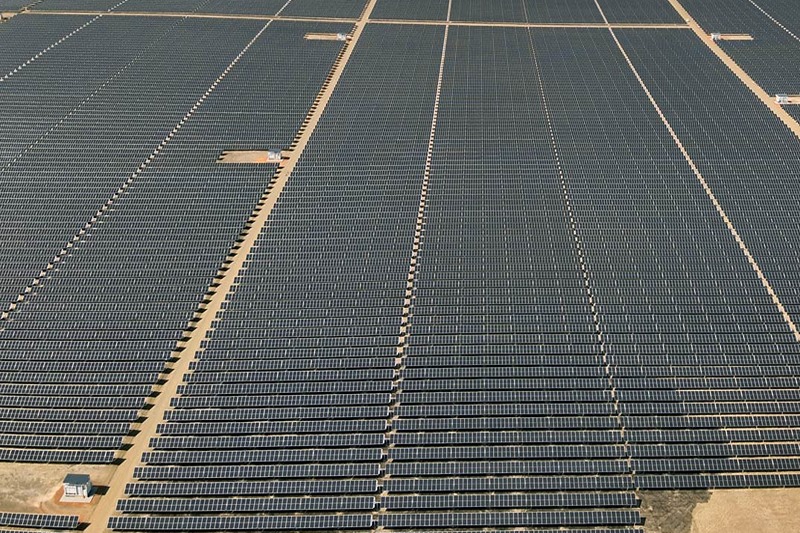

A US$69 million solar power project is being developed in Nhamatanda district, Sofala province, as Mozambique accelerates renewable energy investment and works towards universal electricity access by 2030. The proposed 45-megawatt (MW) Nhamatanda Solar Plant will cover approximately 160 hectares in Lamego locality and is being developed through a public-private partnership between state-owned electricity utility Electricidade de Moçambique (EDM) and private company VBC.
The project is currently undergoing public consultation as part of Mozambique’s environmental licensing process and Environmental Impact Assessment (EIA), with a local consultation meeting scheduled at the Tica Administrative Post. According to the Non-Technical Summary submitted for public consultation, the solar photovoltaic plant will include two 110-kilovolt transmission lines extending approximately 11.9 kilometres to connect the facility to the Lamego Substation before feeding electricity into the National Electricity Grid (REN).
The development forms part of the Government’s broader Energy for All programme and is intended to increase renewable generation capacity while strengthening the national grid and expanding access to electricity. The project also highlights the infrastructure requirements accompanying Mozambique’s accelerating electrification drive. The environmental assessment identifies potential impacts on agricultural land, economic activities, land occupation and sites of cultural importance, with a Resettlement Plan and Livelihood Restoration Plan provided for affected households.
Government data indicates that Mozambique recorded more than 75,000 new electricity connections during the first quarter of 2026. Of these, 44,743 were connected through the National Electricity Grid, while 30,668 were provided through standalone systems powered by solar and mini-hydropower projects. The Nhamatanda development comes as Mozambique continues to build a pipeline of utility-scale renewable projects. In June, the Government launched a tender for a further 30-MW solar plant in Dondo, also in Sofala province, reviving the Renewable Energy Auctions Promotion Programme (PROLER), developed with support from the European Union.

According to the Ministry of Mineral Resources and Energy, the programme is designed to prioritise “competitive and transparent tender procedures for the selection of private investors with the appropriate technical and financial capacity and an interest in developing renewable energy generation projects, leading to the selection of the lowest-cost solutions for consumers”. The expansion of renewable generation is being matched by increased investment in the distribution network. EDM Chairman Joaquim Ou-Chim previously said the utility planned to invest US$82 million in 2026, with approximately US$70 million expected from the World Bank-financed ProEnergia project and US$12 million from EDM itself.
“This effort is part of the strategic commitment to achieving 100% access to electricity by 2030 through the expansion of the National Electricity Grid, the implementation of off-grid solutions and the strengthening of existing infrastructure, ensuring greater energy inclusion,” concluded Joaquim Ou-Chim. EDM plans to deliver at least 420,000 new connections by the end of 2026, potentially extending electricity access to around two million people. The utility estimates that national electrification has already reached 66.4%, with grid expansion and off-grid programmes being deployed to close the remaining access gap.