

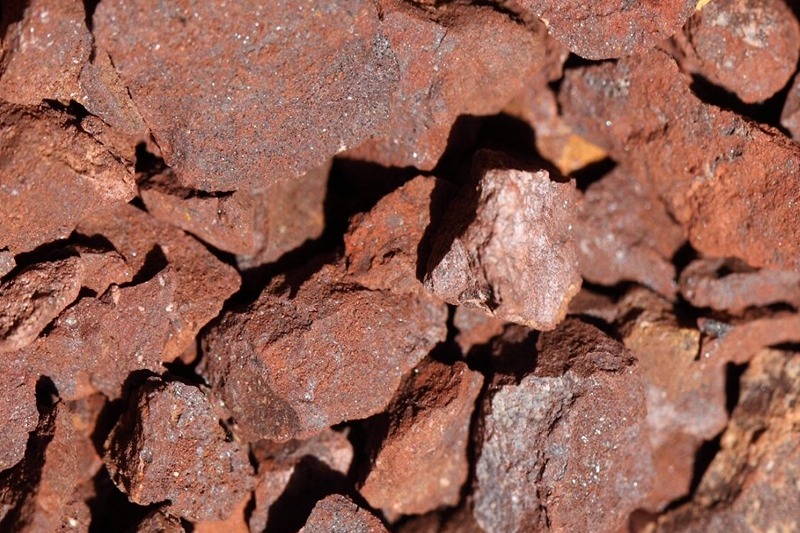

South Africa’s Northern Cape iron ore is proving its quality can command a premium even in a soft market and Kumba Iron Ore is now spending R11.2 billion to make that premium a bigger share of its production mix.
Kumba’s average realised export price hit $90 per wet metric tonne (wmt) in the first half of 2026, 8% above benchmark and among the strongest in the seaborne iron-ore market, with average iron content of 63.6% and a lump-to-fines ratio holding around 66%. The company’s Chief Executive Officer Mpumi Zikalala noted, “We continue to supply markets beyond China such as Japan, South Korea and Europe, achieving an overall price premium of $7 per ton above the benchmark.”
The diversification strategy is a direct response to where global steel demand is heading. China’s steel demand is expected to plateau over time, but long-term demand for premium iron ore is expected to stay positive as higher-grade products become increasingly important to new steel capacity, particularly in India and South East Asia, markets Kumba is positioning to serve as the China-centric growth story matures. The mechanism for capturing that shift is ultra-high dense media separation (UHDMS), an advanced processing technology Kumba is installing at Sishen that’s expected to lift premium ore output to 55% of the mine’s production, up from 18% currently. The main tie-in is on track to begin next month, with Sishen’s DMS plant shutting down and only the jig plant remaining operational during the changeover, a deliberate near-term production sacrifice for a longer term quality upgrade.
Engineering is substantially complete and all major procurement finished on the UHDMS project, now 45% complete overall. Kumba has invested R5.2 billion of the approved R11.2 billion project capital to date, with the budget unchanged. Zikalala said, “The UHDMS is an investment in Kumba’s future. It will improve our product quality, increase recovery from our existing resource, strengthen the competitiveness of our business and also more critically, extend the life of the Sishen mine.” Kolomela, meanwhile, continues at normal production levels, and Kumba remains on track for full year guidance of 31-33 million tons.

Asked directly by Mining Weekly media whether Kumba is pursuing AI-driven modernisation, Zikalala was unambiguous about where the technology is already delivering results. She said, “I can confirm that we do have an AI strategy as a business and as you would imagine, some people see AI as a threat. We actually see it as an opportunity and it’s something that we’re already working on in various parts of our business.” She further credited AI work directly for part of the company’s improved safety performance. The geology application carries particular weight for Kumba’s growth story. In addition Zikalala said, “We’re also implementing AI from a geology perspective and the significant growth that we saw from a resource base is something that we’d like to convert into reserves and actually ultimately see the extension of life at both Sishen and Kolomela.”
With the external environment expected to stay uncertain, Zikalala pointed to operational excellence as the lever Kumba can pull regardless of market conditions. “Our focus will remain firmly on the things that we can control, which is how we will unlock the next phase of value at Kumba,” added Zikalala. The programme’s priorities are specific to lowering costs, improving overall equipment effectiveness, increasing yield from assets and improving returns from capital projects.
Kumba’s operational and financial performance held up despite genuinely extreme weather. Sishen recorded its highest rainfall since 1963 and Kolomela its highest since 1918. Fatality-free production extended past ten years at Sishen and past three years at Kolomela, while Kolomela began drawing wheeled renewable electricity. Women now make up 32% of Kumba’s workforce.
Financially, the half-year generated R24 billion in enduring shared value, with EBITDA margin at 35% and closing net cash of R12.1 billion. Attributable free cash flow came in at R1.9 billion, return on capital employed at 26% and the board declared an interim cash dividend of R7.90 per share, totalling R2.5 billion, of which empowerment partners will receive R0.8 billion. The UHDMS investment is Kumba’s attempt to convert that quality edge into a structurally larger share of premium output, a bet that the India and South East Asia demand story will reward the miners who get there first.