





Marking a significant step-up in the contribution of the country’s gas resources to public finances as major projects move towards production, Mozambique expects revenues from liquefied natural gas (LNG) to surpass US$100 million in 2029.
The forecast is contained in the Government’s Medium-Term Fiscal Scenario (CFMP) 2027-2029, recently approved by the Council of Ministers and used to guide State Budget preparation and fiscal policy over the medium term. State revenues associated with gas projects are projected at US$80.1 million in 2027 and US$78.4 million in 2028 before rising to US$101 million in 2029.
The Government states that “State revenues from LNG exploitation are expected to remain relatively stable in 2027” and that “from 2029, a gradual acceleration is expected”. The projected increase coincides with a major expansion in Mozambique’s LNG industry, with several large-scale projects in the Rovuma Basin expected to progress from development into production.
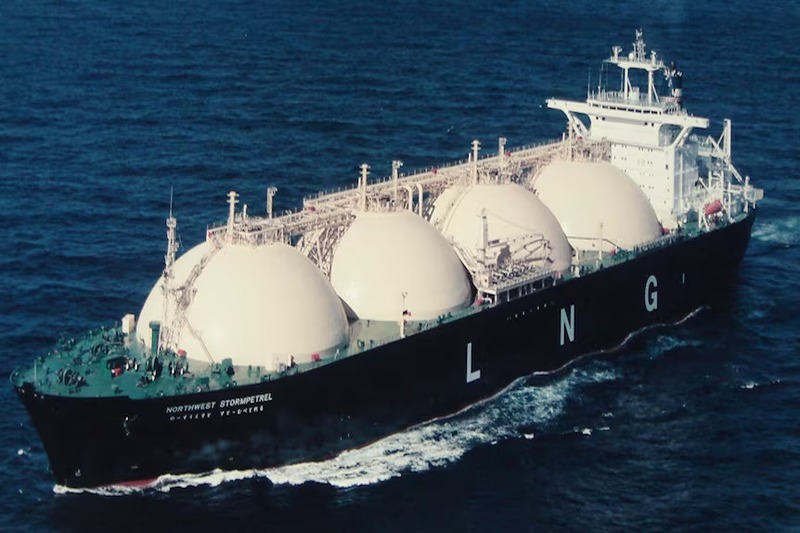
Mozambique has three major LNG developments approved to exploit its gas reserves, which are located offshore in the Rovuma Basin in northern Cabo Delgado and are considered among the largest in the world. Eni’s Coral Sul project remains the only project currently producing LNG, having started production in 2022. The investment in a second floating production platform, Coral Norte, was approved in October last year.

The US$7.2 billion Coral Norte development is expected to double production from 2028 to seven million tonnes per year (mtpa), while a third floating unit is also under consideration. The next major milestone is Mozambique LNG, operated by TotalEnergies in Area 1. Following a four-year suspension linked to terrorist attacks in Cabo Delgado, the US$20 billion project officially resumed in January and is expected to produce up to 13 mtpa from 2029.
According to the CFMP projections, Mozambique LNG will remain in preparation in 2027 before moving into development in 2028 and reaching “initial production in the last quarter” of 2029. The timing is significant for the Government’s revenue outlook, as the start-up of Mozambique LNG is expected to coincide with the acceleration in State revenues from gas projects.
ExxonMobil’s US$30 billion Rovuma LNG project in Area 4 is expected to follow, with production of up to 18 mtpa anticipated after 2030. A final investment decision on the project is expected in September. The Government’s fiscal projections therefore place LNG increasingly at the centre of Mozambique’s medium-term economic outlook. The official scenario assumes that economic growth will progressively benefit from the expansion of the energy sector and major projects, particularly LNG.
Under the Law on the Sovereign Fund, 60% of net gas revenues will be channelled to the State Budget, while the remaining 40% will be transferred to the Sovereign Fund of Mozambique. Based on the current projections, the Government expects to transfer approximately US$48.1 million to the State Budget in 2027, US$47 million in 2028 and US$60.6 million in 2029.
The funds are expected to support investment in economic and social infrastructure, agriculture, renewable energy and industry, giving LNG revenues a role beyond the energy sector itself. In addition, the projected revenues also form part of the Government’s broader fiscal consolidation strategy, which aims to increase the contribution of domestic revenues to State financing while reducing the vulnerability of public finances.
The Government expects public debt to decline from 72.2% of gross domestic product (GDP) in 2025 to 67.1% in 2029, with growing LNG revenues expected to contribute to the improvement. However, the revenue outlook remains exposed to factors beyond the Government’s control. The CFMP acknowledges that the projections depend on international market conditions, project schedules and the security situation in areas where major LNG developments are being implemented.
Security remains a particularly important consideration in Cabo Delgado, which continues to experience attacks by insurgent groups and was a major factor behind the previous suspension of Mozambique LNG. The US$101 million forecast therefore represents a measure of how quickly the country’s long-awaited gas investments can begin translating into public income.