

Mozambique is forcing international mining companies to hand over significant ownership stakes to the state, marking an aggressive escalation in the wave of resource nationalism sweeping across Africa’s mineral-rich economies.
Under sweeping new legislation, the Southeast African nation will mandate a minimum 15% non-dilutable state ownership stake in all mining ventures. The shares will be managed by a newly established National Mining Company. Crucially, Maputo’s new policy goes a step further than standard regional mandates: the government can now intervene at any stage of the industrial value chain, rather than just at the initial mining license phase.
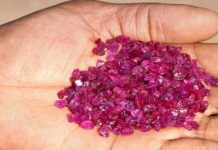
The policy shift directly targets Mozambique’s vast deposits of graphite a critical component in lithium-ion batteries for electric vehicles and energy storage where the country ranks as the world’s third-largest producer. The nation also hosts the planet’s largest ruby mine and substantial coal reserves.
“The move towards greater localisation aligns with other mineral-rich countries in Africa, and we have seen similar approaches in Zambia, Botswana, Burkina Faso, and Uganda, to name a few,” said Edward James, a corporate crime and compliance expert at law firm Pinsent Masons. “However, the stance adopted by Mozambique differs to that of most of its neighbours in that the new law appears to allow state intervention at any stage of the value chain not only at the grant of a mining license.”

Beyond ownership stakes, the law institutes a strict ban on exporting raw, unprocessed minerals without explicit, high-level government approval. The export ban aims to force international miners to build local processing plants, a strategy designed to retain high-value manufacturing profits within domestic borders. The announcement follows similar aggressive maneuvers by major West African producers, including Ghana and Mali, which both moved to claw back influence over foreign mining concessions earlier this year.
The regulatory overhaul introduces immediate friction for foreign capitals operating in the region. Mozambique’s mining ministry has yet to clarify whether the 15% state clawback will apply retrospectively to existing operations, many of which are locked into decades-long, legally binding state contracts.
Legal experts warn that inserting a state-owned gatekeeper into existing corporate supply chains significantly elevates corruption and compliance risks, particularly surrounding the elusive “special approvals” required to export raw ore.
“Implementing strong anti-corruption safeguards into operations of the National Mining Company, such as independent audits, public disclosure of contracts, and transparent procurement, will be crucial,” said Vishana Mangalparsad, a cross-border investigations expert with Pinsent Masons in South Africa. “These measures are equally important to sustaining investor confidence, as if investors are not confident that their ownership rights will be respected, they are unlikely to invest in exploration.”
The risk for current operators is that regulatory ambiguity creates an environment ripe for extortion, where bad actors within government structures could demand rent-seeking payments to guarantee the survival of multi-million dollar operations.
“The special government approval to export unprocessed minerals will add another layer of compliance risk,” James added. “In essence, these companies will potentially face government gate-keepers who may want to exploit their position for personal gain, knowing that companies will be dependent on them for their survival. Companies need to approach these developments with caution.”