




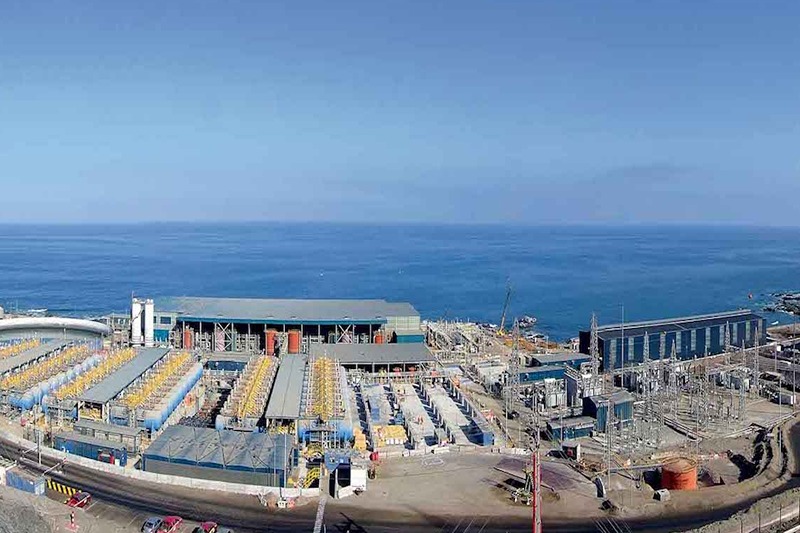

BHP is putting a price tag on everything that isn’t copper. The world’s biggest miner is now exploring the sale of a Chilean desalination plant and its electricity transmission network, according to people familiar with the matter, the latest sign that BHP is willing to shed the infrastructure holding up its business in order to fund its next act.
That next act is copper and BHP is betting big on it. The company has been steadily narrowing its identity, exiting petroleum, shrinking its coal footprint and pouring capital into large-scale copper growth projects, including the Escondida expansion and Argentina’s Vicuña district. The potential Chile sale fits squarely into that pattern: assets that once seemed core to keeping the lights on and the water flowing are now being treated as monetizable, so long as copper keeps growing.
The numbers illustrate the scale of the shift. The assets under consideration, the Puerto Coloso desalination plant and BHP’s power transmission lines could together fetch between $1.5 billion and $2 billion. The transmission lines alone are expected to draw $1 billion to $1.3 billion, with the desalination plant valued at roughly $500 million to $700 million. BHP declined to comment and the people cautioned that valuation, timing and structure remain under discussion, with the process still at an early stage.
What makes the potential sale notable isn’t just the price but what’s being sold. Puerto Coloso is no minor utility asset. It’s one of the largest reverse osmosis desalination plants in the world, pumping 3,800 litres of water per second to an altitude of over 3,200 metres to sustain Escondida, the largest copper mine on Earth. That BHP would consider parting with infrastructure this critical says as much about its confidence in structuring reliable buyer relationships as it does about its appetite for capital discipline. Any buyer, according to one person familiar with the matter, would likely be locked into long-term service agreements with BHP, meaning the miner would keep access to the water and power it needs, just without owning the assets that provide them.

This is not a one-off, it’s a formula BHP has now run twice in recent months as the company has already agreed to sell a 49% stake in transmission assets linked to its Western Australian iron ore business and inked a $4.3 billion silver streaming deal tied to the Antamina mine in Peru. This is a deal first reported by Diario Financiero last month. Together, these moves are part of a stated ambition to unlock as much as $10 billion by treating infrastructure and by-products as currency, not fixed assets. The message to the market is that, at BHP, if it isn’t copper, it’s for sale.