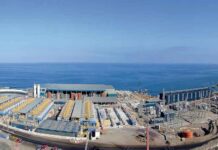
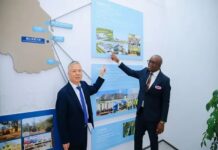



Four years after a brutal jihadist insurgency brought it to a grinding halt, TotalEnergies’ ambitious $20 billion gas project in Mozambique is poised for a dramatic restart. This month, whispers from within the French oil giant suggest CEO Patrick Pouyanne is expected in Maputo, a pivotal visit signalling renewed hope for a venture that could transform one of Africa’s poorest nations into a global energy powerhouse.
The Mozambique LNG project, in which TotalEnergies holds a significant 26.5 percent stake, hinges on its shareholders lifting the force majeure invoked after a devastating 2021 attack. Should all go to plan, Pouyanne has optimistically pencilled in 2029 for the commencement of production, a date many in Mozambique are eagerly awaiting.
A Nation’s Fortune, A Continent’s Future
The story of Mozambique’s gas potential began in 2010 with the discovery of vast offshore natural gas deposits in the northern Cabo Delgado province. This find ignited dreams of Mozambique becoming an African Qatar, a beacon of prosperity in a country where over 70 percent of its population grapples with poverty. The sheer scale of the reserves is staggering: the African Development Bank, in 2018, estimated them at more than 5,000 billion cubic meters – enough to fuel the United Kingdom, France, Germany, and Italy for nearly two decades.

Mozambique’s burgeoning gas sector isn’t entirely new. Exports of liquefied natural gas (LNG) began in November 2022 from the Coral Sul offshore plant, operated by Italy’s Eni. However, this facility boasts only a quarter of the production capacity envisioned for the TotalEnergies site. Adding to this energy mosaic, a third, even larger project, spearheaded by US giant ExxonMobil, is slated for a final investment decision next year – the crucial step before implementation, according to Mozambique’s President.
These combined efforts could profoundly reshape the global energy landscape. A 2024 report by financial experts Deloitte boldly predicts that the country’s immense gas reserves could catapult Mozambique into the top 10 global producers, accounting for a staggering 20 percent of Africa’s output by 2040.
The Cost of Progress: Conflict, Displacement, and Controversy
Yet, this promising future is shadowed by a brutal reality. The projects led by TotalEnergies and ExxonMobil necessitate onshore facilities to liquefy the gas for sea transport, rendering them acutely vulnerable to the spiralling insurgency waged by Islamic State-linked militants. Since October 2017, this jihadist insurgency has ravaged northern Mozambique. The group, often locally dubbed “Al-Shabaab” despite no known ties to its Somali namesake, seeks to impose Sharia law in Cabo Delgado, a long-neglected outpost that has sadly become fertile ground for radical ideologies.
The human cost has been immense. In March 2021, a major assault on the port town of Palma, mere kilometres from the TotalEnergies site, forced thousands to flee into the surrounding forests. Conflict tracker ACLED estimates over 800 lives were lost in that single attack. The aftermath has been fraught with legal challenges: French prosecutors have launched a manslaughter investigation against TotalEnergies amid allegations of failing to protect its subcontractors, some of whom perished. Furthermore, an investigation by Politico accused government soldiers tasked with protecting the gas site of deadly abuses against fleeing villagers, prompting investigations by Mozambique’s public prosecutor and human rights commission. TotalEnergies has stated it formally requested Mozambican authorities to investigate in November 2024.
The violence continues to claim lives and livelihoods. The United Nations reports that at least 48,000 people have been displaced by the conflict since the start of 2025, and ACLED estimates a grim total of 6,000 lives lost since 2017. Efforts to contain the insurgency have seen Russia’s Wagner Group fail, leading to the deployment of Rwandan troops in 2021. Despite Rwanda’s involvement in the conflict in eastern Democratic Republic of Congo, the European Union renewed funding for this operation this year, driven by Brussels’ urgent need to diversify its gas supplies and reduce its reliance on Russia.
Economic Boom, Social Questions
The restart of the project has also navigated the choppy waters of domestic politics, delayed by months of protests following disputed October elections. Nonetheless, the economic forecasts are undeniably optimistic. The International Monetary Fund anticipates Mozambique’s economic growth to “accelerate sharply to reach 10 percent in 2028 and 2029 as the first onshore project begins production,” a significant leap from an estimated 2.5 percent in 2025.
However, the question of who truly benefits remains pertinent. The Mozambique LNG consortium indicates that TotalEnergies’ project will only create 5,000 local jobs at the peak of construction. The broader benefits for the local population will largely depend on the sovereign wealth fund established by the government – a critical point in a nation scarred by a history of corruption and debt scandals.
While the prospect of Mozambique becoming a major gas exporter offers a glimmer of hope for economic prosperity, it also raises significant concerns among civil society and environmental groups. Local NGO Justica Ambiental, among others, has denounced the “gas rush” as a “climate bomb,” particularly for a country already identified as Africa’s most vulnerable to climate change by the 2023 World Risk Index.
As Pouyanne’s visit looms, all eyes are on Maputo. Will the restart of this mega-project truly usher in an era of prosperity for Mozambique, or will the shadows of insurgency, environmental concerns, and historical governance issues continue to loom large over its gas-rich future?